How to Build a Commander Deck in Magic: The Gathering
Build a Commander deck in six steps: pick a commander, check color identity, choose a plan, count lands, follow the one-copy rule and agree on a bracket.
We earn from qualifying purchases through links on this page. How we make money.
To build a Commander deck, pick a legendary commander, then fill the other 99 slots with single copies of cards that share the commander’s color identity. Choose one plan for the deck, include enough lands (Wizards’ beginner decks run 32 to 34 basic lands plus others) and agree on a Commander Bracket with your table before you play.
Step 1: Pick a commander you want to build around
The commander is the first and biggest choice in a Commander deck. Under the Comprehensive Rules it must be a legendary creature card, or one of a few legendary Vehicle or Spacecraft cards. It sits in the command zone at the start of every game, so you will cast it often.
A good first commander has an ability that tells you what to do: make tokens, reward a creature type or grow bigger as the game goes on. Wizards’ five Foundations Commander decks show the idea well, from an Angel that makes every later Angel bigger to a green creature that tramples over blockers.
Step 2: Check color identity before adding cards
Color identity is the filter for every other card in a Commander deck. A card’s color identity includes every mana symbol in its cost and in its rules text. Every card in the deck may only use mana symbols that also appear on the commander, and colorless cards are always allowed.
Check the rules text as well as the cost. A card that costs only generic mana can still be off-color if its text has a red mana symbol, and then it cannot go in a mono-green deck.
Step 3: Choose one plan for the Commander deck
A Commander deck works best when most of its cards push one plan. Wizards’ old Magic Academy column gave new deck builders the same advice for any deck: narrow your options instead of mashing every card you own into one pile.
Good plans for a first deck are simple to say in one sentence:
- Fill the board with tokens, then make them all bigger.
- Cast huge creatures early with extra mana, then attack.
- Sacrifice creatures for value, then return them from the graveyard.
Every card you add should either follow the plan, protect it, or deal with what opponents do. Cards that do none of these are the first to cut.
Precons to start from
Live listings, shown by eBay
Opens eBay in a new tab. Check condition, seller feedback and returns.
Step 4: Count the lands in a Commander deck
Lands in a Commander deck are worth counting before anything else is cut. The Foundations Commander decklists give a reliable reference for a beginner deck:
| Deck | Basic lands in Wizards’ list |
|---|---|
| Calling All Angels | 32 Plains |
| Keen Engineering | 34 Islands |
| Wretched Ranks | 33 Swamps |
| Reign of Dragons | 32 Mountains |
| Tramplesaurus Rex | 32 Forests |
Those counts are basic lands only; the decks also play other lands. Start near those numbers. Wizards’ Magic Academy column describes the mana curve the same way for any deck: mix cheap spells for the early turns with a few expensive ones for later, so you have something to do every turn.
Step 5: Follow the one-copy rule
The one-copy rule covers every card in a Commander deck except basic lands. The Comprehensive Rules say that, other than basic lands, each card must have a different English name, and the deck must contain exactly 100 cards with the commander. Count the deck before every first game with it.
Sort the deck by name when you count. Two copies of the same card in different printings, such as a normal and a foil version, still count as the same card.
Step 6: Agree on a Commander Bracket with your table
Commander Brackets are an optional way to match decks of similar strength, published by Wizards of the Coast. There are five brackets, from 1 Exhibition and 2 Core up to 5 cEDH. Wizards keeps a list of especially strong cards that can take over a game: bracket 1 and 2 decks use none of them, bracket 3 allows up to three, and brackets 4 and 5 allow any number.
Tell the table your bracket before the game. A focused, high-power deck at a table of casual decks makes for a short game that few players enjoy.
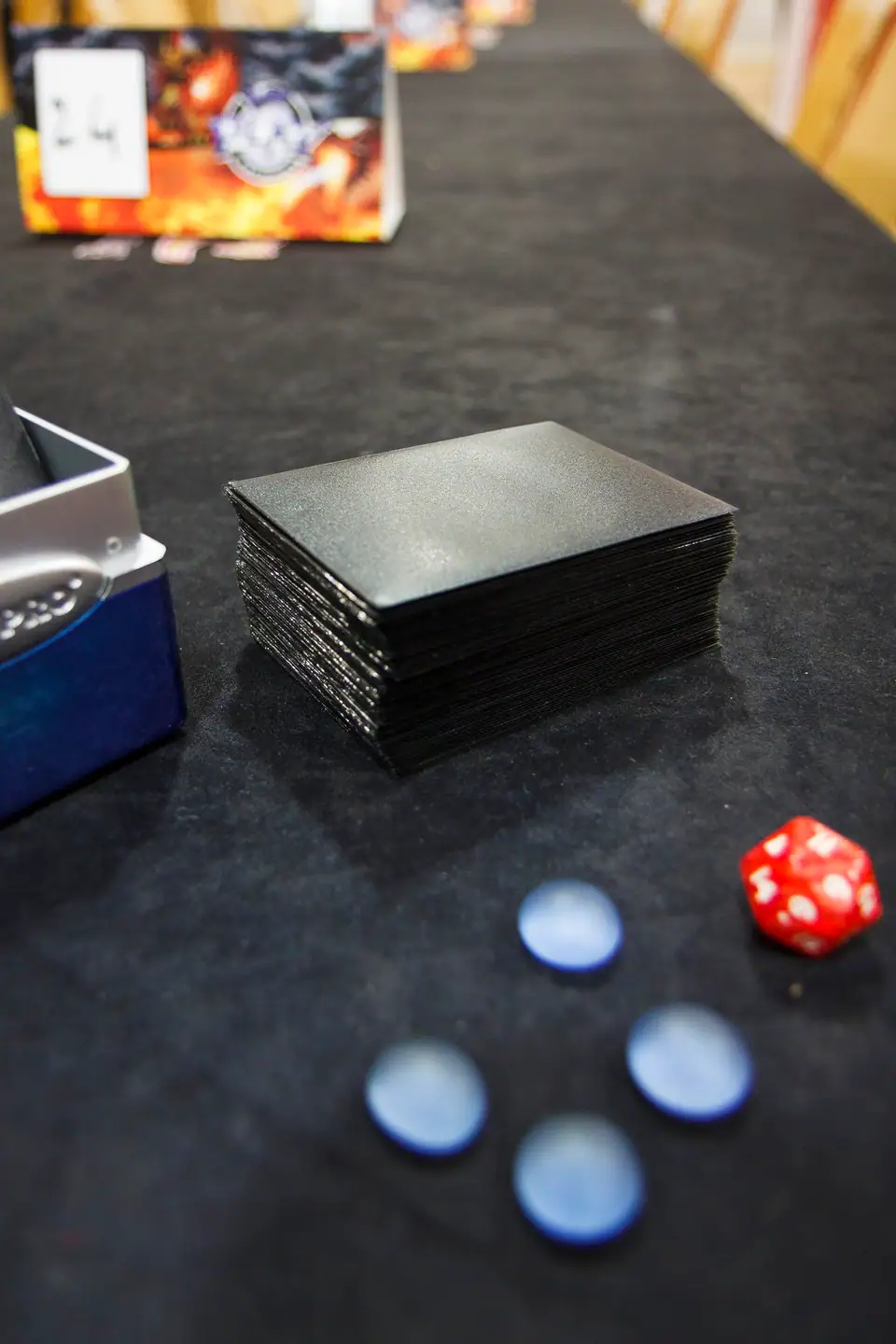
Sleeves for a 100-card deck
Live listings, shown by eBay
Opens eBay in a new tab. Check condition, seller feedback and returns.
Where to start if you would rather not build from scratch
Most players start from a precon and change it. The Commander precon hub lists the current decks, Foundations Commander decks compares the five beginner decks, and what a Commander deck is covers the rules of a game.
Frequently asked questions
Can my commander be any legendary card?
No. Under the Comprehensive Rules the commander must be a legendary creature card, or one of a few legendary Vehicle or Spacecraft cards. Wizards' format page simply says to choose a legendary creature or artifact.
How many lands should a Commander deck have?
There is no fixed rule. As a reference, Wizards' five Foundations Commander decks each run 32 to 34 basic lands before counting other lands. Start near that and adjust after a few games: add lands if you miss land drops, cut some if you draw too many.
Is it cheaper to build a Commander deck or buy a precon?
A precon gives you 100 cards, tokens and a deck box in one purchase, so most new players start there and swap cards in later. Building from single cards lets you pick every card but means buying them one by one.
Sources
- Magic: The Gathering Comprehensive Rules (effective September 25, 2026), rule 903Wizards of the Coast
- MTG Commander FormatWizards of the Coast
- Foundations Commander DecklistsWizards of the Coast
- Building Your First Deck (Magic Academy)Wizards of the Coast
Filed under Commander decks and precons